
AI Automation & Integration

We identify business processes that can benefit from automation and design AI-driven workflows that integrate seamlessly with existing systems.
- Process Analysis: Identifying repetitive and time-consuming tasks.
- Workflow Design: Creating automated pipelines with AI integration.
- System Integration:Connecting AI models with business applications.
- Monitoring & Optimization: Continuously improving performance.

Software & Tools




AI Automation & Integration Use Cases
AI automation improves efficiency and reduces operational costs.
-
Business Process Automation
AI automates repetitive and rule-based tasks such as data entry, invoice processing, and report generation. By integrating with existing systems, it reduces manual effort, minimizes errors, and improves operational efficiency, allowing teams to focus on strategic work.
-
Intelligent Customer Support
AI-powered systems integrate with CRM and communication platforms to deliver seamless customer support. From automated ticket routing to AI chatbots and response suggestions, businesses can ensure faster resolution times and consistent customer experiences across channels.
-
Workflow Automation Across Systems
AI enables end-to-end automation by connecting multiple business applications such as ERP, CRM, HRMS, and finance systems. It ensures smooth data flow between departments, eliminates silos, and streamlines complex workflows without manual intervention.
-
Document Processing & Data Extraction
AI solutions can automatically extract, classify, and validate data from documents like invoices, contracts, forms, and emails. Integrated systems can then push this data into business applications, accelerating processing times and improving accuracy.
-
IT Operations Automation (AIOps)
AI helps IT teams monitor systems, detect anomalies, and automate incident responses. By integrating with monitoring tools, AI can predict potential issues, reduce downtime, and ensure system reliability through proactive maintenance and automated alerts.
-
Sales & CRM Automation
AI integrates with CRM platforms to automate lead scoring, follow-ups, and pipeline management. It helps sales teams prioritize high-value prospects, personalize outreach, and improve conversion rates through data-driven insights and automated workflows.
-
Marketing Automation & Personalization
AI enhances marketing platforms by automating campaign execution, audience segmentation, and personalized messaging. Integrated AI systems can deliver the right content to the right audience at the right time, improving engagement and ROI.
-
Finance & Accounting Automation
AI streamlines financial operations by automating processes such as expense tracking, invoice matching, reconciliation, and compliance reporting. Integration with accounting systems ensures real-time updates and improved financial accuracy.
-
HR & Employee Experience Automation
AI simplifies HR processes such as onboarding, payroll, attendance tracking, and employee support. Integrated AI assistants can handle employee queries, schedule interviews, and improve overall workforce experience.
-
Supply Chain & Logistics Automation
AI integrates with supply chain systems to automate order processing, shipment tracking, and inventory updates. It improves coordination between vendors, warehouses, and distributors, ensuring faster and more efficient logistics operations.
-
Smart Decision Support Systems
AI integrates with business intelligence tools to provide real-time insights and automated recommendations. Decision-makers can rely on AI-driven dashboards and alerts to take timely and informed actions.
TECHNOLOGY PARTNERS





GLOBAL LOCATIONS
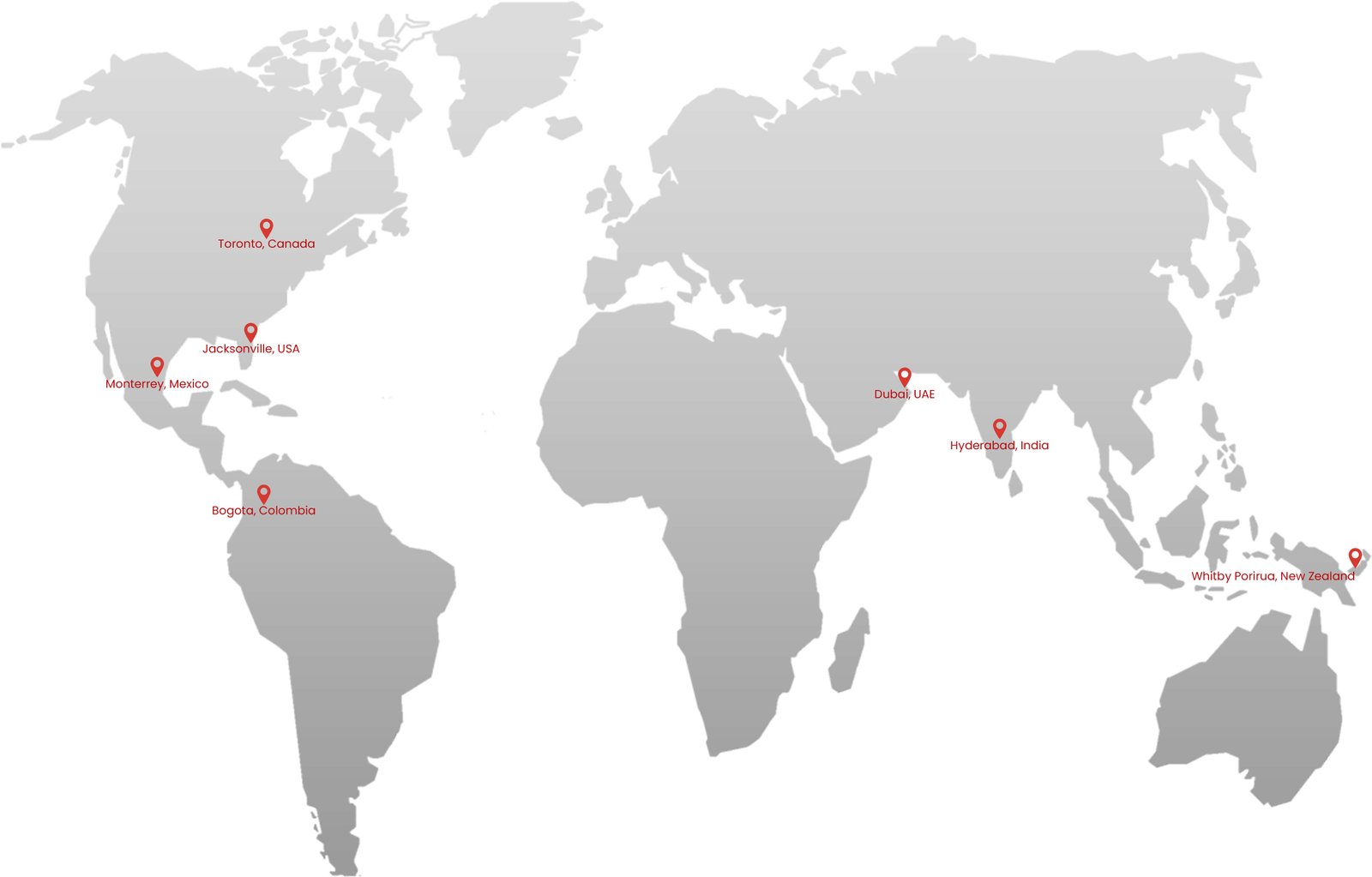
Dubai, UAE
Whitby Porirua, New Zealand
Hyderabad, India
Monterrey, Mexico
Bogota, Colombia
GET IN TOUCH

+1-904-900-8850

info@globalitassociates.us

8825 Perimeter Park Blvd.
Suite #501,
Jacksonville, FL-32216.

